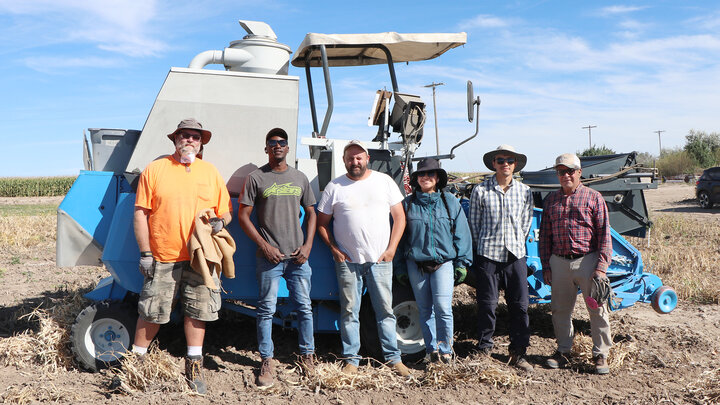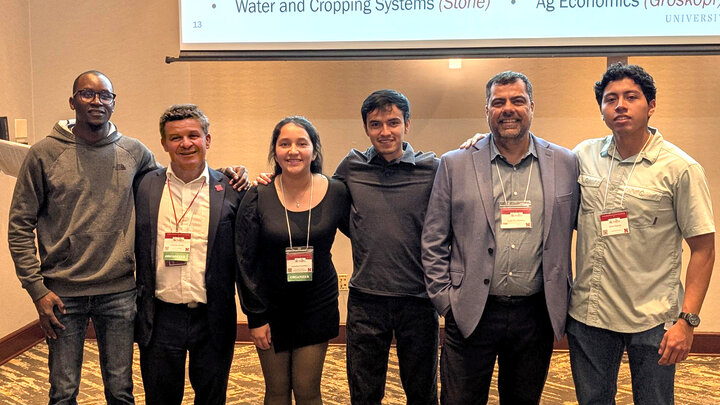
The Bean Improvement Cooperative (BIC) and the National Pea Improvement Association (NAPIA) held their biennial meeting in Lincoln on Nov. 4-6, hosted by the University of Nebraska-Lincoln (UNL) and BIC. The international meeting had 15 countries represented by students and leaders in pulses research.
“It was decided from the beginning to be done every two years. This is the second time that both BIC and NAPIA meetings are done together,” said Dr. Carlos Urrea, UNL Dry Bean Breeding Specialist and a member of BIC. “The International BIC & NAPIA Biennial Meeting allows members and colleagues worldwide and from varied disciplines to interact and exchange information on bean and pulse improvement.” The venue provides a forum on recent research developments and allows collaboration to plan projects in pulse crops. It also enhances collaboration with scientific and industry leaders from all over the world.
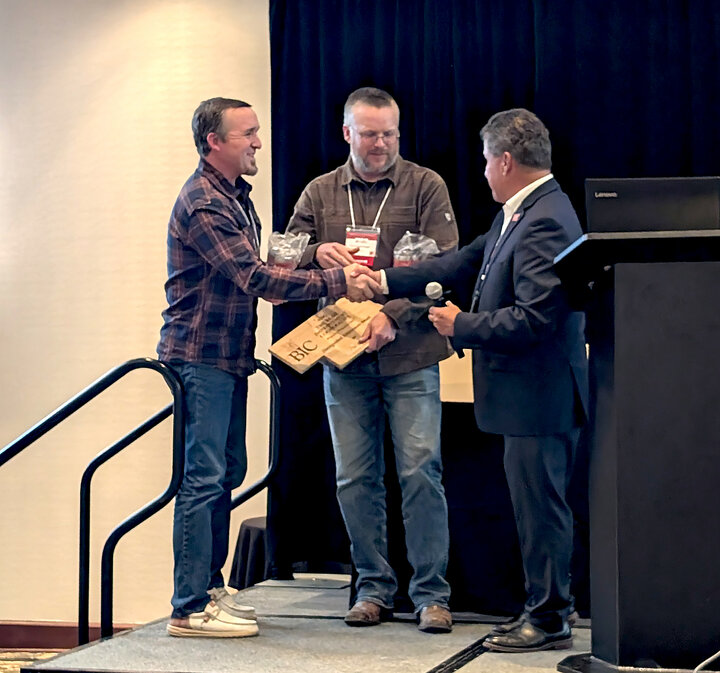
Matt and Luke Shellenberger of ProVita Inc. receive a Distinguished Achievement Award In Memory of Ron Shellenberger from Carlos Urrea. Courtesy Photo
Dr. Andy Benson from UNL was one of the event's keynote speakers and collaborated with Urrea on a gut health project. Urrea provided seeds for the Mesoamerican Diversity Panel, which included 299 entries. The MDP comprises beans from the Durango and Mesoamerican gene pools. Beans from the Durango race are pinto, pink, and great northern. Navys, small reds, and blacks are from the Mesoamerican bean pool. Benson’s research combined quantitative and functional genomics in cereal grains and legumes to link naturally occurring genetic variation in the plants with desirable microbiome and host responses. His topic at the meeting was “Genetic Analysis of Traits in Dry Beans that Affect the Human Gut Microbiome.”
Graduate students are also invited to the meeting, providing an opportunity to showcase their research as posters. The research posters covered heat tolerance, harnessing genomic selection, disease resistance, and more. Students were recognized for their oral and poster presentations, with first and second place awarded in each category.
“Graduate students were able to participate and had the opportunity to network with faculty and people from the pulses industry,” Urrea said. “There were also 12 international/national travel award winners. We were able to give those travel awards because of the sponsor's generosity.”
BIC Oral Awards
First Place: Jose Cerna-Figueroa, North Dakota State University
A Framework for Genomic Selection in Dry Bean Breeding: From GBS to SNP Chip Development
Second Place: Habib Akinmade, University of Florida
Genomic and Phenotypic Dissection of Resistance to Meloidogyne enterolobii in Cowpea for Breeding Durable Cultivars
BIC Poster Awards
First Place: Grace Sidberry, Michigan State University
Evaluating a Breeding Panel of Historical Common Bean (Phaseolus vulgaris) Lines for Effects of Indirect Selection
Second Place: Elisabeth Portilla, Regional Service for Agrofood Research and Development (SERIDA), Villaviciosa, Spain
Exploring the Genetic Control of Seed Coat Color in a RIL Population Derived from a Red x Red Cross
NAPIA Poster Awards
First Place: Vishal Monga, Montana State University
Impact of Fungicide Application Timing on Ascochyta Blight Disease Severity and Yield in Chickpea in Northeastern Montana
Second Place: Sadie Cooper, Cornell University
Genomic Mapping of the Determinant of Anthocyanin Production in the Pods of Pisum Sativum
Third Place: Sonia Salaria, Clemson University
Genetic mapping of a chickpea (Cicer arietinum L.) diversity panel for mineral biofortification towards human nutrition
NAPIA Oral Awards
First Place: Nathan Windsor, Clemson University
Field Performance of Organic Dry Pea (Pisum sativum L.) and Associated Genes
Second Place: Stephen Awodele, University of Saskatchewan
Integrating Transcriptomics and Machine Learning to Uncover Genes Underlying High and Moderate Levels of Fusarium Root Rot Resistance in Pea
Third Place: Mark Dempsey, Clemson University
First Steps Toward Adapting Lentil for Organic Production in the Southeastern U.S.
The Bean Improvement Cooperative (BIC) is a voluntary and informal organization established to facilitate the exchange of information and materials to improve bean production worldwide.
NAPIA’s originating organization, the National Pea Improvement Association, was formed in 1956 to support fresh pea breeders. Over the years, the focus began to turn to dry pea. In 1999, the name was changed to North American Pulse Improvement Association (NAPIA) to include other food legumes and the Canadian pulse industry.