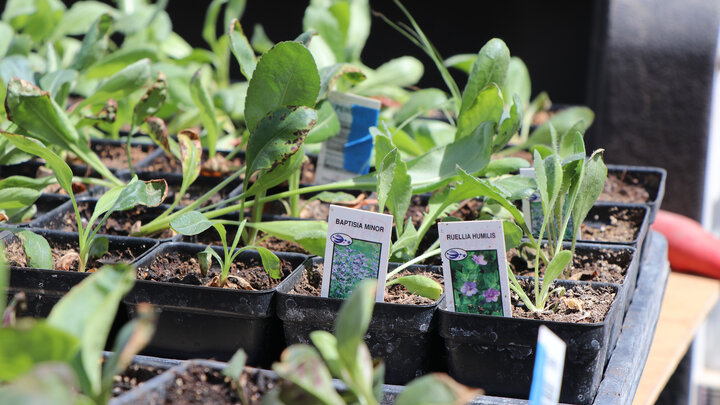
May is here, and its finally time that we are getting past the scare of frost and can fully get into our gardens. Do you have any questions about your garden? I have a list of some common questions I get almost every year. So, to help you get started growing, I’m going to answer the following common questions on matching plants to their environment and providing adequate space, sunlight, consistent soil moisture, nutrient-rich soil, and regular care.
First space, what kind of space is needed? What can I grow in a big space versus a small space? If space is limited, choose compact crops like turnips, beets, lettuce, bush beans, or herbs; avoid large vining crops like squash or tomatoes that are indeterminate (vining), but choose tomato varieties that are determinate (bush-growing). If you have the space to grow, your imagination is the limit. This question is usually followed by, "Why do my plants need space?” Proper spacing ensures roots and branches have room to grow, preventing competition for nutrients and improving airflow to the plant, relieving pest and disease issues, leading to a better harvest. This includes taking care of weeding your garden frequently, to remove them before they get too big and steal nutrients from the wanted plants in your garden. This is also a way to regularly check your garden for pests and signs of stress, so you can manage issues early.
Sunlight. “What is full sun?” Full sun is six plus hours of direct sunlight, generally in a south-facing area. Partial sun is four to six hours of direct sunlight daily. You will find the sunlight needed to grow a plant written on the pot's label or on the back of a seed packet. What if you only have a shaded area? Then choose leafy greens and herbs that only need three to six hours of sun. When it comes to watering. It is best to start by checking the soil moisture. Watering when the top inch is dry is a good rule of thumb. Water early in the morning to minimize evaporation and the risk of disease. Water the soil directly, not the blooms, fruit, or leaves, to reduce the risk of disease.
Lastly, nutrients and soil quality greatly impact your plant's health. Using healthy soil rich in organic matter to provide nutrients for your plants is best. A soil test to determine nutrient needs before amending the soil can be done at the University of Nebraska-Lincoln Panhandle Research Extension and Education Center in Scottsbluff. The Center will offer resources, guidance on proper sampling techniques, and provide soil testing kits for submission to labs. They focus on nutrient management, including residual nitrogen and phosphorus testing and pH testing for regional agriculture.


