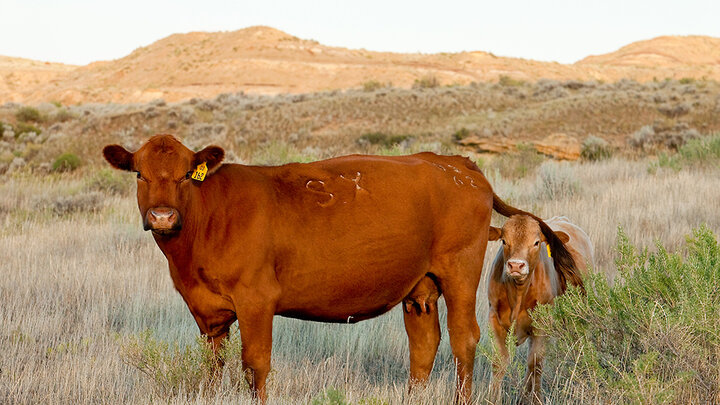
Cattle producers may have the opportunity to use Conservation Reserve Program (CRP) acres after July 15 if drought conditions continue. Producers located in or next to counties in Nebraska impacted by drought conditions may be authorized for emergency grazing or haying.
Eligible producers interested in grazing CRP under the emergency authorization and current CRP participants who choose to provide land for grazing to an eligible livestock producer, must first request approval to graze eligible acreage through the Farm Service Agency. They will also need to obtain a modified conservation plan from the Natural Resource Conservation Service that includes grazing requirements.
Utilizing CRP for grazing provides both challenges and opportunities.
The availability of water on CRP acres will be the first concern. The water requirements for a cow-calf pair in July can be close to 25 - 30 gallons per day. It can be expensive to haul water to cattle, but less than the cost of harvested feed. Early weaning calves and grazing dry cows on CRP acres may be a better option for producers where water availability is limited or needs to be hauled.
Forage quality. Depending on when the CRP acres were last grazed or hayed, and on the species of grasses and legumes present, there may be a lot of old grass growth that will be low in quality. If most of the feed is old growth, supplemental protein and energy will likely be needed to meet cattle's nutritional requirements. This is especially true for replacement heifers and young cows with calves at side that have high nutrient requirements. It is important that cows entering and going through the breeding season not be on a decreasing nutrition plan. Cows that are rapidly losing weight prior to and through the breeding season will likely have decreased conception rates.
Supplementing cows on low-quality forage with adequate protein and energy to maintain cow body condition score through the breeding season is an important consideration when grazing CRP. Nebraska Extension Beef Specialists and Educators are available to answer questions concerning supplemental protein and energy needs.
Efficient utilization of available forage in CRP depends on the grass species present. The forage can be old, brittle standing forage. This old-growth forage can easily be knocked down and trampled by cattle, resulting in loss to grazing. Examining ways to strip-graze or partition out forage to reduce loss from trampling may help efficiently utilize the grass present.
The opportunity to utilize CRP acres for grazing under drought conditions can provide rangelands with critical rest and provide cattle producers with forage.