The devastation the wildfires across Nebraska have caused this past year is unimaginable. Communities and people’s lives have changed forever. The estimated total acres burned in Nebraska by wildfires in 2026 to date is 981,502, with the Morrill fire in the Sandhills estimated at 642,029 acres. Though not the highest priority, one item that should be addressed in the near future is the risk of invasive plants appearing in areas that have never had them before.
Early Detection and Rapid Response (EDRR) is a concept for identifying potentially invasive species prior to or just as their establishment is taking place. An Integrated Pest Management (IPM) plan can be developed to manage, contain, and potentially eradicate the invasive species before it spreads further. This will help to avoid costly, long-term control efforts.
Landowners and managers should be aware of this potential problem and be ready to act should the situation arise. Invasive plants spread through the environment in several ways, including equipment, wind, water, wildlife, livestock, and forage stocks. With the extensive wildfires that have occurred, it is very possible that seeds and plant parts from these plants have moved considerable distances to new areas in pastures, farm ground, and riparian sites. The forages generously shared by producers from other states could also contain other invasive plants not seen in these areas. Producers utilizing these forages should monitor the areas where they were fed for new plant species.
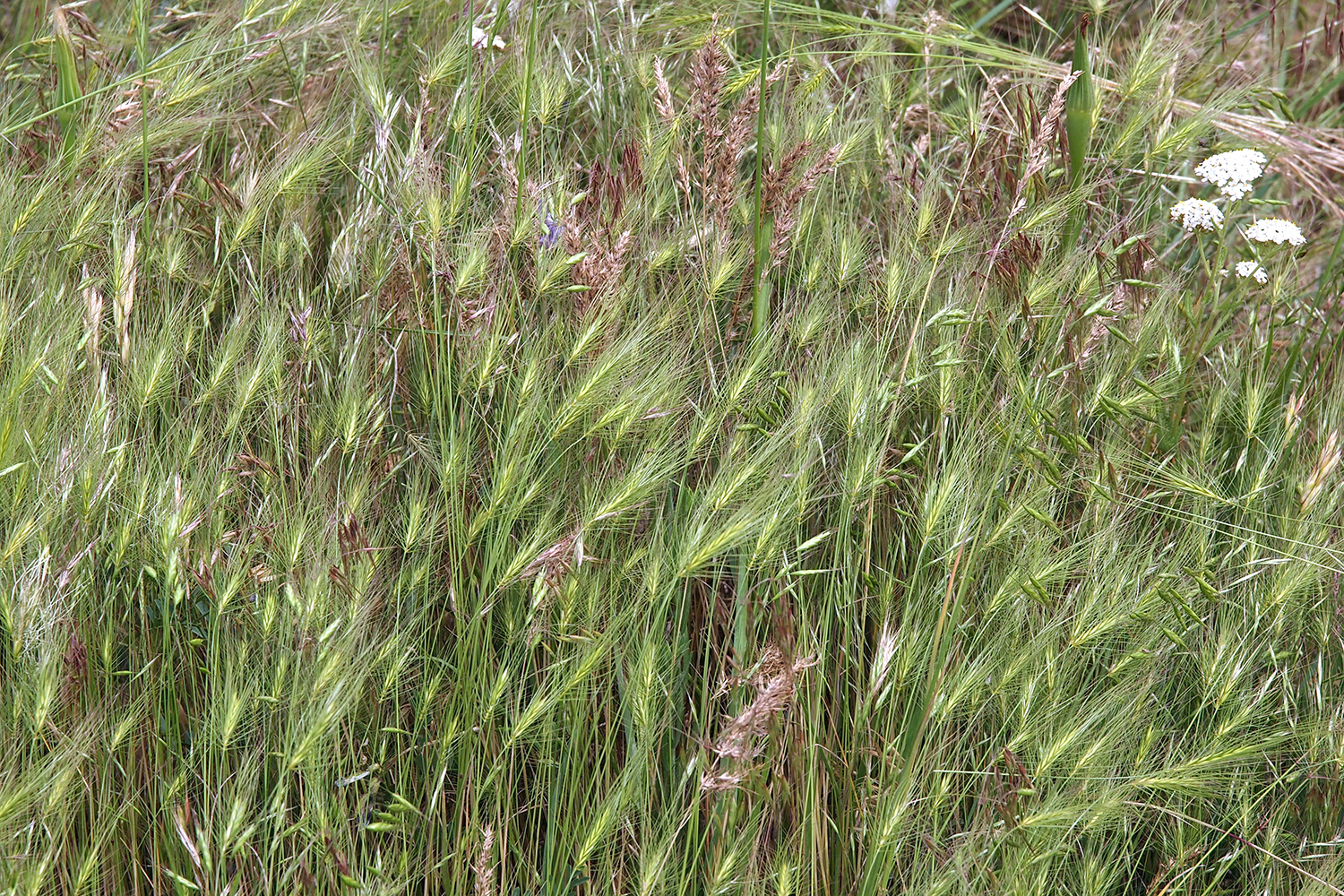
Medusahead [Taeniatherum caput-medusae (L.) Nevski ] - Gary Stone / Nebraska Extension
In addition to the Nebraska Noxious Weed list and the county-added noxious weeds, two devastating invasive winter annual grasses of particular concern for the Sandhills and grasslands are Medusahead (above) [Taeniatherum caput-medusae (L.) Nevski ] and Ventenata (below) [Ventenata dubia (Leers) Coss.]. Both non-native invasive grasses pose significant ecological and fire threats. These invasive grasses contain a high silica content, making them less desirable as forage. Heavy infestations reduce native forage production, can form monocultures, and can decrease land value and biodiversity. Control of these two species is similar to that of Cheatgrass. Other invasive plants to watch for are Bulbous bluegrass (Poa bulbosa), Dalmatian toadflax [Linaria dalmatica (L.)], Sulphur Cinquefoil (Potentilla recta L.), and Viper’s bugloss (Echium vulgare L.).
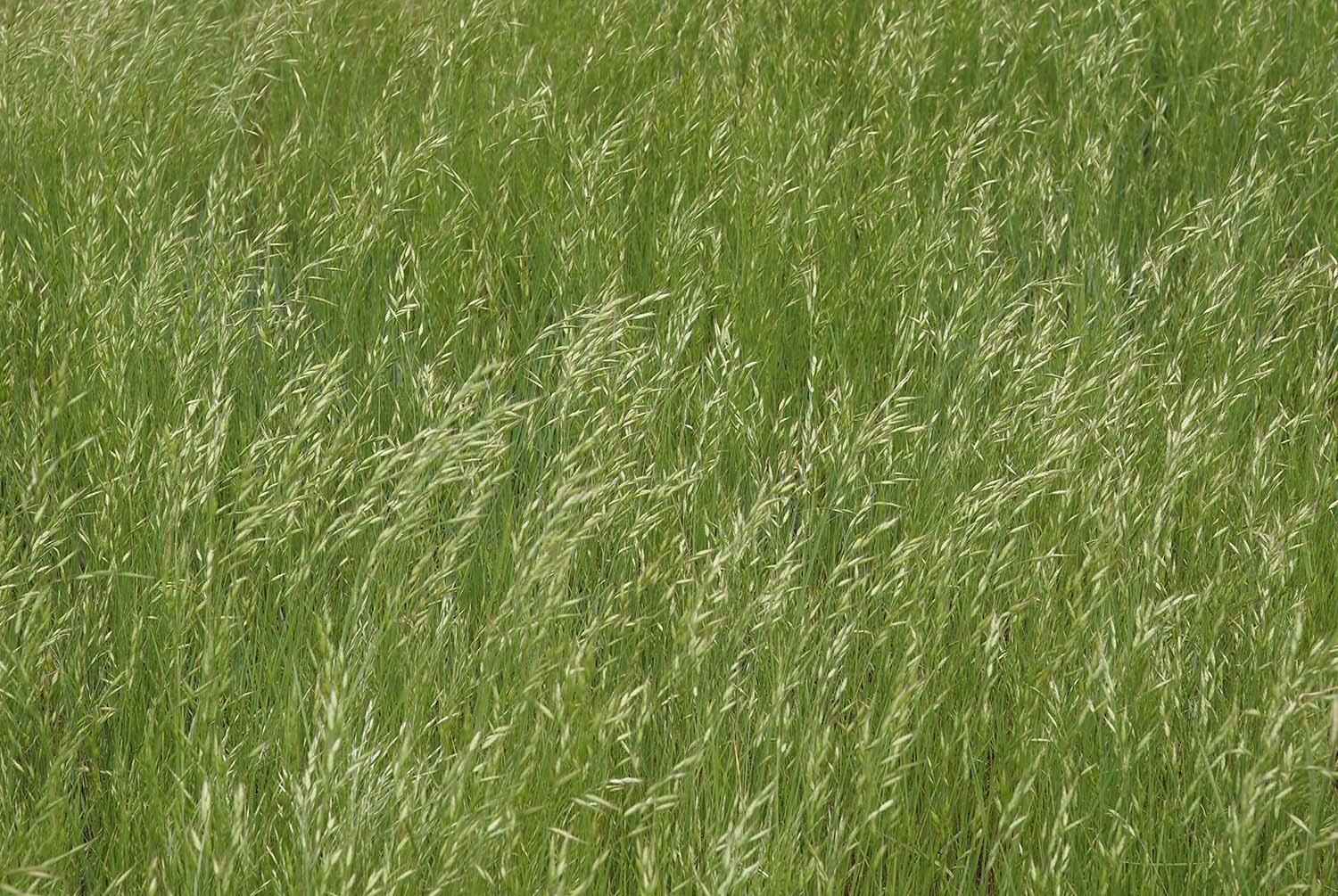
Ventenata [Ventenata dubia (Leers) Coss.] - Gary Stone / Nebraska Extension

Ventenata [Ventenata dubia (Leers) Coss.], left and Medusahead [Taeniatherum caput-medusae (L.) Nevski ], right - Gary Stone / Nebraska Extension
Prevention is the best and cheapest management option. Scout and monitor your land for any new plants. If you cannot identify the plants, contact your local Nebraska Extension Educator or local Nebraska Weed Control Authority for assistance.
It is best to detect and control these plants during the early stages of infestation. Do not let them become established in the long term, as controlling and maintaining these plants will become more costly and time-consuming. Managing these plants early and preventing seed production are key to keeping them from spreading. Several management options (IPM) may be required.
The best timing for winter annual grasses is in the fall, prior to or shortly after emergence. Perennial plants are best managed early in their growth stage before they become established. Perennial plants and most biennial plants are managed during the rosette stage in early spring or in the fall, after a frost.
Mowing can be done, but it will need to be repeated for regrowth, as it does not kill the plants. Mowing plants with visible seed heads will not prevent seed production.
Chemical treatment options are available to manage these invasive plants. Products containing aminopyralid, clopyralid, chlorsulfuron, dicamba, metsulfuron methyl, picloram (Restricted Use), triclopyr, glyphosate (non-selective), and 2,4-D have been shown to work for broadleaf invasives. Indaziflam, imazapic, and rimsulfuron work well on annual grass species but become less effective later in the season, with fall treatments offering the best control. Application timing is critical for efficient efficacy. The use of these products may adversely affect native plant species. Be sure to read and understand the product label about these concerns. Consult the product manufacturing representatives if you have questions. Tank mixes of several of these compounds may provide better control. Adding a non-ionic surfactant to the herbicide mix will aid in control; however, retreatment may be necessary. Continue monitoring the sites for any missed plants or regrowth.
Be sure to select a product labeled for the site and the plant you want to manage. Read, understand, and follow all label instructions when using any pesticide.