By Gary Stone |Nebraska Extension Water and Crops Educator, Dr. Xin Qiao | Nebraska Extension Water Irrigation Specialist, Brock Ortner | Nebraska Extension Livestock Systems Educator
With the current drought situation across the region and the questionable surface irrigation water deliveries for the 2026 growing season in the North Platte River valley, producers have been asking how much water it takes to grow various crops in the area.
The table below the estimated crop water requirements/use for the main crops grown in the area.
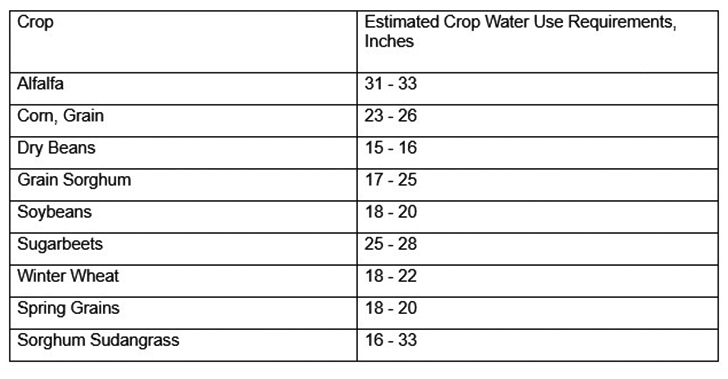
Figure 1. Estimated crop water use requirements for the Nebraska Panhandle and eastern Wyoming
Crop water use requirements will vary due to soil moisture conditions, precipitation, temperature, wind speed, elevation, and the growth stage of the crop. Critical water requirements will vary by crop. Crops grown for grain will require the most water during the pollen set and grain fill. Dry beans will require water throughout the growing season, from blossom to pod fill, due to their shallow root depth. Sugarbeets require water during the initial growth stages due to the smaller plant size and root structure, but can be stressed when the root is longer and larger.
The free ACREE app is a mobile irrigation scheduling tool that does not require soil moisture sensors.
Producers growing crops selected for grazing or harvested forage should consider the possibility of nitrate and prussic (hydrocyanic acid - HCN) acid poisoning in livestock. Annual forages including brassicas, corn, millet, small grains, sorghum, and sorghum sudangrass, have the potential to accumulate nitrates (Nitrates in Livestock Feeding – G1779), and warm-season annuals are associated with a high risk of prussic acid toxicity. Prussic acid and nitrate levels may increase in forage plants under stress, such as drought, early frost/freeze, and high nitrogen applications. Forages can be tested for both (Avoiding Prussic Acid Poisoning in Grazing: When and How to Use a Quick Test / UNL Beef / Nebraska).
For more information, contact Gary Stone at 308-632-1230, gstone2@unl.edu, Dr. Xin Qiao at 308-632-1246, xin.qiao@unl.edu, or Brock Ortner at 308-327-2312, bortner2@nebraska.edu.