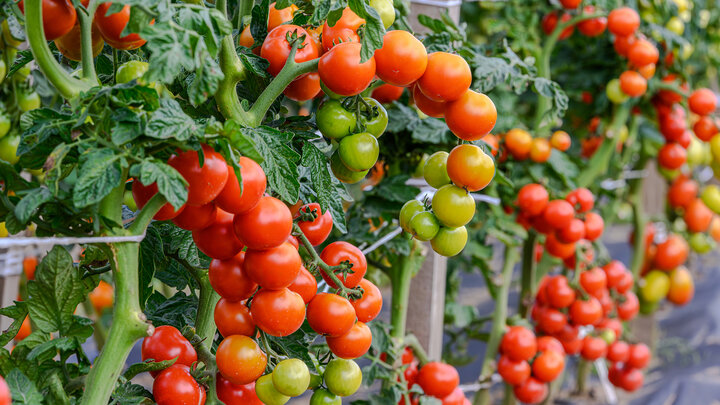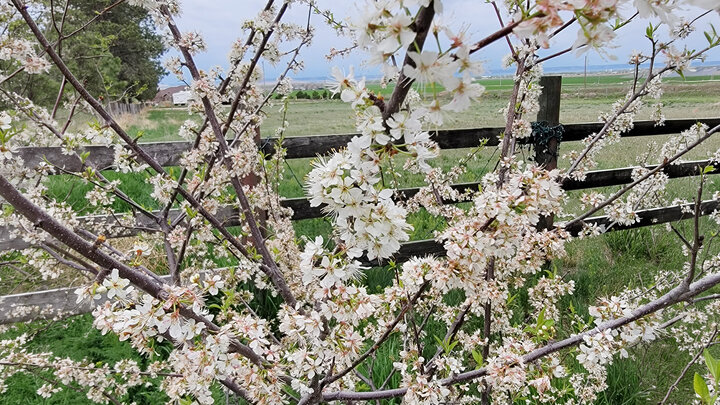
Scotts Bluff County saw some low temperatures on April 17-18, and there could be more freezing overnight temperatures in the forecast. Unusually high temperatures in February and March have contributed to many trees starting to bud or leaf out. Some examples of this include Ash, Elm, and Honeylocust. Flowers and fruiting structures have also started developing slightly ahead of schedule. Late freezes will surely affect both leaf and fruit production on our fruit-bearing trees.
New growth on trees is especially vulnerable to damage from frost. Leaves can become tattered and can turn brown or black as they thaw out, indicating tissue death. Typically, healthy trees can push a second set of buds to account for leaves damaged by freezing temperatures. It is important to note that it may take several hours to days to understand the complete damage rendered to the trees by the frost event.
Frost cracks are also known to develop on thin barked trees during times of severe temperature shifts. However, these cracks tend to form when those trees are exposed to temperatures of minus 20 degrees Fahrenheit (F), especially after a warm spell. Thus, these are unlikely to be seen or created at this point in the season.
Another concern with some of our trees in the area is the potential effect on fruit production in our fruiting trees. However, the stage of flower and fruit development during the time of the freeze will highly dictate how much damage the cold temperatures may inflict on your fruit crop.
Peach trees may see the most damage after our most recent freeze, as they are less cold hardy than apples. If your peach’s flower buds have already turned pink, temperatures as low as 25 for 30 minutes can yield 10% crop mortality. If the flowers are in full bloom, similar temperatures (24 F) for 30 minutes could yield 90% fruit mortality.
Apples usually bloom later than the peaches, which may lend a hand in some cases of these late season freezes. However, that can add to fruit mortality at higher temperatures. If your apple’s leaf buds are just starting to leaf out (when you can see a little bit of green but the leaves haven’t opened yet), temperatures of 23 degrees F or lower may yield 10% fruit mortality. Meanwhile, trees in first or full bloom have been found to have 90% fruit mortality at temperatures of 25 degrees F or lower.
While some crop loss is expected from this past weekend, mild to moderate fruit loss to frost is not always a bad thing. Thinning of the fruit can lead to the remaining developing fruit receiving more resources throughout the season, sometimes resulting in a higher quality fruit crop.
For more information, contact Keefe, at lkeefe2@unl.edu or at (531) 280-8758 or the Panhandle Extension Center.